Effective National Planning to Coordinate Action on Plastic Pollution
Read our new National Planning Working Group for Plastics Action insights paper: Effective National Planning to Coordinate Action on Plastic Pollution.
View resource
As nations continue talks on what is expected to be the final round of negotiations (INC-5.2) for a legally binding Global Plastics Treaty, a new working group launched in Geneva will support countries to drive effective national action on plastic pollution.
A group of leading NGOs, international organisations and academic institutions, have announced a new National Planning Working Group on Plastics Action to build member states’ confidence in national planning and drive more effective, ambitious action on plastic pollution in line with a Global Plastics Treaty.
The Working Group – including Common Seas, Global Plastic Action Partnership of the World Economic Forum, Global Plastics Policy Centre, IUCN, World Bank, WRAP Plastics Pact Network and Eunomia Research & Consulting – has collectively supported national planning in over 60 countries to date.
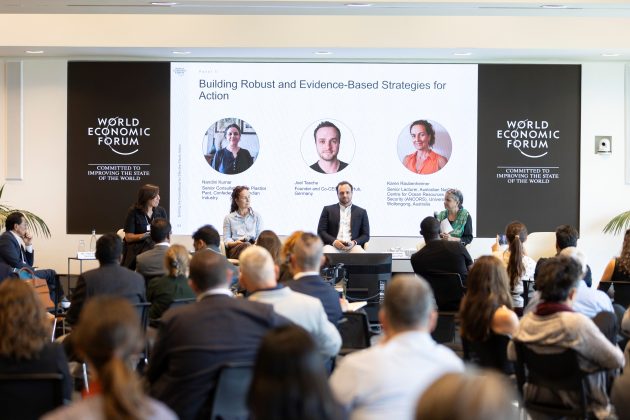
This new Working Group was announced at an event on the sidelines of Global Plastics Treaty negotiations in Geneva.
With representatives from government, the private sector and academia gathered just days before the final round of Treaty negotiations, the Working Group aims to ensure that countries are not left without the confidence, tools, evidence, and guidance needed to design and implement effective coordinated efforts to address plastic pollution at the national level.
While ambitious global rules are needed to deliver an effective Treaty, national action will play a key role in translating member states’ commitments into practice. Draft Treaty texts propose national plans as the primary vehicle for implementing the Treaty. Whether tackling plastic waste, reducing plastic production, or supporting circular economy transitions, national planning can offer a structured way for countries to deliver on their commitments.
However, national planning approaches vary, and many governments face challenges in accessing technical support, aligning stakeholders, and securing investment. The National Planning Working Group on Plastics Action aims to close these gaps by bringing together years of practical experience, independent research, and technical expertise to create a network of support.
Dr Antaya March, Director of the Global Plastics Policy Centre, said: “National plans have the potential to turn Treaty commitments into practical, coordinated action. But getting them right takes time, resources, and support. Our aim is to ensure countries aren’t left to figure it out alone and that they have access to tools, evidence, and shared experience to shape plans that are locally relevant and more likely to deliver lasting change.”
Each organisation in the Working Group brings unique experiences to the table. Some have worked directly with governments to facilitate stakeholder engagement and policy development, while others have developed tools, methodologies, and research to guide effective planning by both governments and the private sector. Together, the group offers a shared space for exchanging lessons, aligning on best practices, and providing support to governments and businesses.
The Working Group is designed to avoid duplication, reduce fragmentation, and ensure that knowledge developed in one country can benefit others. It also recognises that while templates can help, there is no one-size-fits-all solution – plans must be adapted to local realities, priorities, and capabilities.
Thais Vojvodic, Director of Partnerships at Common Seas, said: “Several countries are already showing leadership by developing ambitious national strategies to tackle plastic pollution. Previous environmental agreements show that doing so can be a powerful tool to accelerate access to financing for implementation. This is vital for countries like Small Island Developing States, which are disproportionately impacted by plastic pollution. The Working Group is committed to continuing to support countries on the development of national planning and sharing learnings to accelerate action.”
Christian Kaufholz, Head of Community Engagement & Impact at the Global Plastic Action Partnership of the World Economic Forum, added: “We are committed to supporting countries at every stage of their national planning journey to tackle plastic pollution. We invite governments and partners to connect—whether to access tailored support, exchange lessons learned, or co-develop more effective planning approaches.”
To mark the launch, the Working Group published a new Insights Report ‘Effective national planning to coordinate action on plastic pollution’ authored by the Global Plastics Policy Centre. Drawing on the group’s collective experience, the report identifies what makes national planning efforts successful and what pitfalls to avoid.
Key findings include:
The National Planning Working Group on Plastics Action invites governments, technical agencies, development partners, and businesses to engage with its work to shape more effective approaches to national planning for plastic pollution. Whether countries are just beginning their planning journey or looking to refine and implement existing strategies, the Working Group offers a platform for peer exchange, technical support, and practical tools.

Read our new National Planning Working Group for Plastics Action insights paper: Effective National Planning to Coordinate Action on Plastic Pollution.
View resource