Reducing plastic waste generation and pollution in Papua New Guinea
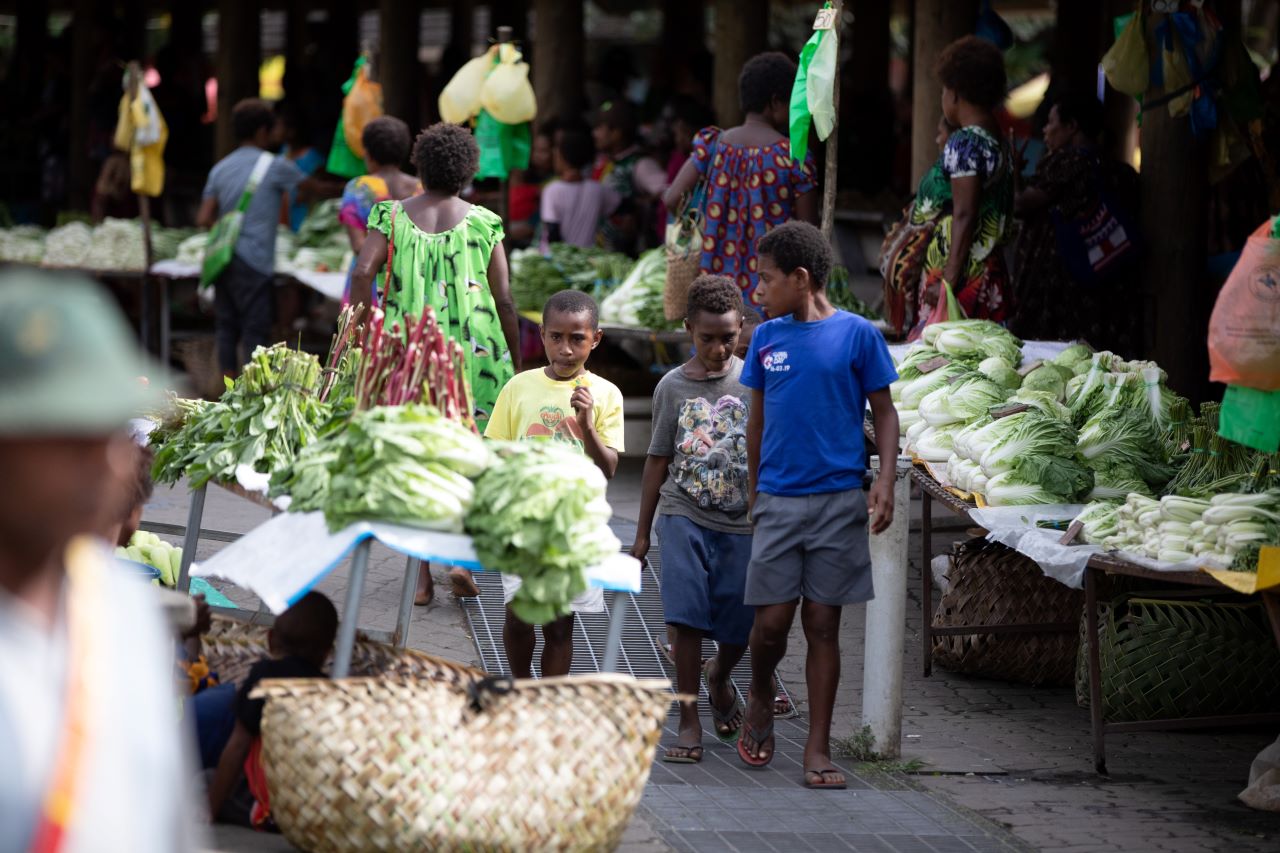

Papua New Guinea is renowned for its diversity – both natural and cultural. Here, more languages are spoken than in any other country, and ecosystems range from volcanic highlands to the world’s third largest tropical rainforest.
However, PNG’s environment and communities alike are at disproportionate risk from a growing threat: plastic pollution.
In 2024 alone, PNG generated an estimated 214,700 tonnes of plastic waste, of which 118,200 tonnes leaked into the environment – the equivalent weight of 65,000 passenger vehicles.
Without decisive action, plastic pollution is set to grow by 43% to 169,500 tonnes per annum by 2035.
To tackle this challenge and protect PNG’s ecosystems and public health, the Conservation and Environment Protection Authority in Papua New Guinea partnered with Common Seas to develop a National Action Plan to End Plastic Pollution.
The plan sets out a practical, long-term pathway of both upstream and downstream interventions to reduce marine plastic pollution by around 61% over the coming decade.
Patrick Cumming, Data Modelling Lead
Plastic pollution in Papua New Guinea
214,700 tonnes
of plastic waste was generated in 2024
55%
of it leaked into the environment
1.7 million tonnes
of plastic pollution will enter the environment by 2035 with no action
Strategies to reduce plastic pollution by 61% per year over the coming decade

The National Action Plan sets out system-change strategies that could cut annual plastic pollution by 61% by 2035 — a reduction of over 46,000 tonnes per year compared to business as usual.
Strategy 1 – Upstream focus: Closing the tap
Strategy 2 – Item focus: Reducing single-use plastic bottles
Strategy 3 – Supporting collection and recycling
Strategy 4 – Downstream focus: Preventing leakage
"Addressing the crisis of plastic pollution is very important for Papua New Guinea, given our unique biodiversity and the reliance of our communities on a pristine national environment."
Brendan Trawen, Acting Director at CEPA
Our supporters
Supported by funding from the UK Government through UK International Development, Common Seas is partnering with five Small Island Developing States (SIDS) to develop National Action Plans to tackle plastic pollution.
As part of the Sustainable Blue Economies Programme, this critical funding will allow us to develop and scale an approach tailored to the unique challenges and needs of SIDS, which are disproportionately affected by the plastic crisis. The project is supporting partner governments to radically reduce ocean plastic in their countries over the course of ten years and contribute to a sustainable blue economy.
Our partners