
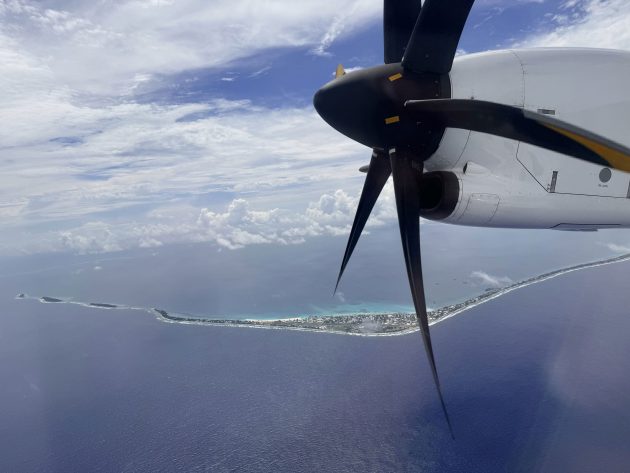
I arrived in Tuvalu on a small plane from Nadi, Fiji, and immediately it was apparent that this remote small island state was different to anywhere I had visited before. As I sat beside colleagues from the Secretariat of the Pacific Regional Environment Programme, I noticed the small size of the aircraft, the limited number of passengers. But most striking was the atmosphere of focus that showed me we were all travelling for the same reason: to witness the launch of the National Action Plan to Tackle Plastic Pollution in Tuvalu.
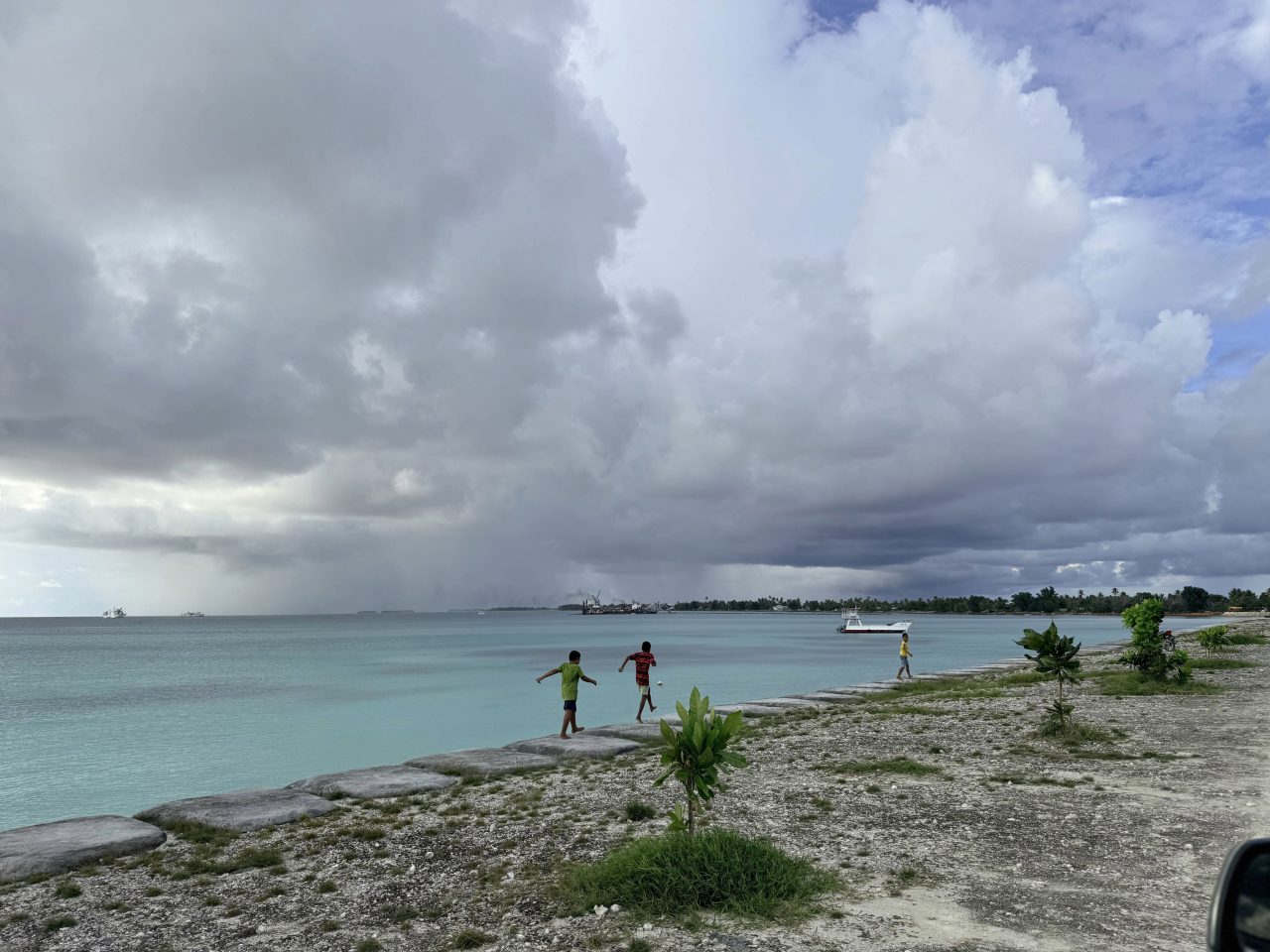
Within minutes of landing, the scale of the island became real. The runway stretches across the length of Funafuti. It doubles as a road, and a playground for children. The guesthouse was a two-minute walk away. The same faces from the plane appeared again – at the guesthouse, on the street, at the convention centre, at meetings. Everything felt close. Not just geographically, but socially.
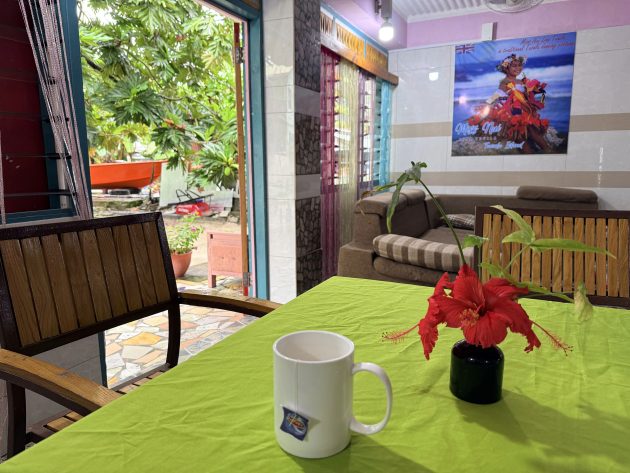
Over the next two days, working alongside colleagues from the Ministry, the Department of Waste Management, TuCAN, and SPREP, I experienced something I hadn’t expected so immediately: a deep sense of calm. People were warm, composed, and grounded. Even in busy moments – finalising logistics, distributing invitations, preparing for the launch – there was no chaos.
At one point, I visited the hospital to get emergency supplies after my luggage didn’t arrive. Even there, the atmosphere was steady and kind. It made me pause.
In global development, we often speak about the “capacity constraints” faced by Small Island Developing States (also known as ‘SIDS’). But Tuvalu showed me something different. Yes, resources are limited. But I saw that when it comes to clarity, leadership, and commitment, capacity is high, and there was a quiet confidence in how people navigate the constraints the country faces.
A shared understanding of resilience
I had come to Tuvalu with a sense that I would connect with the place. And I did, even more than I expected.
I am originally from Pakistan. Our countries could not be more different in size or geography, but there is something we share: resilience.

When I was two and a half years old, I lost my father. Later, growing up in southern Pakistan, my family experienced severe flooding. We lost everything, including the photographs and memories that might have helped me build an image of him.
That experience shaped how I understand vulnerability, but also strength. It taught me what it means to move forward when circumstances feel overwhelming.
In Tuvalu, I recognised that same strength.
A place shaped by natural beauty and climate pressure
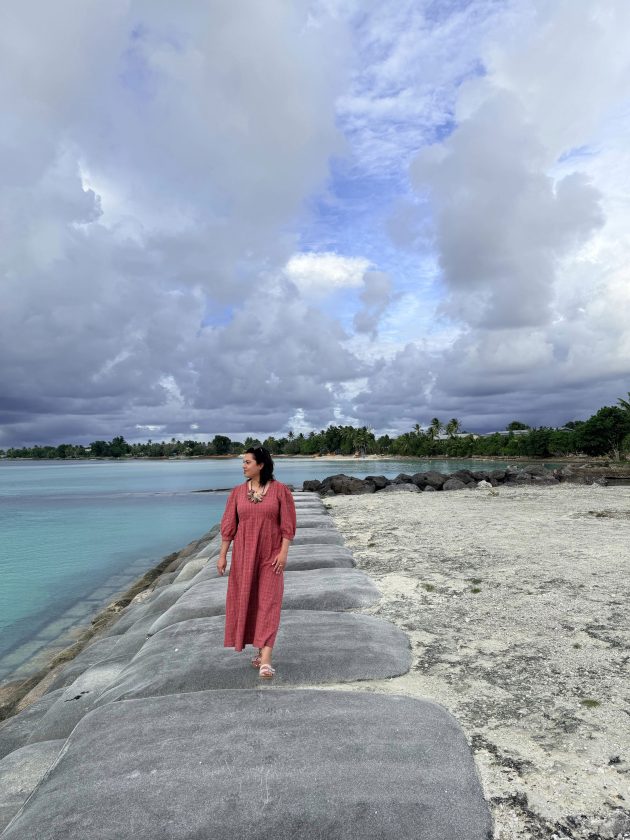
Tuvalu is home to around 12,000 people. The island is narrow, around 400 metres at its widest point, and as little as 10 metres at its narrowest.
It is also one of the first countries in the world preparing for climate-induced migration.
Seeing this first-hand changes your perspective.
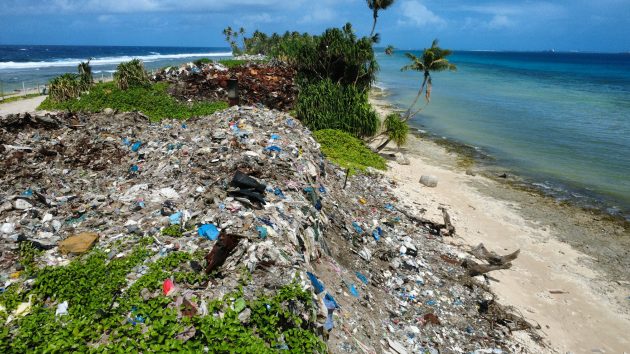
Plastic pollution in Tuvalu is not an isolated issue. It compounds existing pressures. Waste has nowhere to go: systems are limited, and land is finite.
Our analysis shows that in 2024, Tuvalu generated around 202 tonnes of plastic waste, roughly 19 kilograms per person per year. Each year, around 54 tonnes leak into the environment, and approximately 49 tonnes entering the ocean.
Most plastic waste collected in Funafuti is transported to a dumpsite located along the lagoon. It is open, exposed to wind and erosion. Standing there later in the week, during a stormy evening, I saw how easily waste could move from land to sea.
The problem is not only about how much plastic pollution Tuvalu generates. It is about where it ends up.
Without action, around 660 tonnes of plastic could enter Tuvalu’s environment by 2035.
A national moment, and what comes next
At the launch, I had the honour of representing Common Seas and presenting the National Action Plan to Hon. Sa’aga Talu Teafa, Minister for Natural Resources Development, who attended on behalf of Hon. Dr Maina Talia and Permanent Secretary Pepetua Latasi.
In a brief exchange before the ceremony, the Minister expressed his appreciation for the work and his interest in the findings. It was quite reassuring to hear that this was a technical milestone – and implementation of policies to reduce plastic pollution in Tuvalu is a national priority.

The Plan itself is grounded in evidence and shaped by local insight. It sets out four practical strategies:
- Reduce unnecessary plastics, particularly single-use items
- Expand reuse systems, including refill solutions
- Strengthen recycling and shared responsibility through policy mechanisms
- Improve waste collection and disposal systems to reduce leakage
Together, these measures could reduce Tuvalu’s plastic pollution by over 40% within ten years.
But what matters now is implementation.
Seeing the priorities up close
On my final evening, Deputy Secretary Mr. Penivao Moealofa kindly drove us across the island. We visited the northern tip, where the dumpsite is located. The weather had turned – strong winds and heavy rain bore down on us.
The road narrowed. On either side, the ocean felt close.
The dumpsite sits at one of the most exposed points of the island. Seeing it in those conditions made the challenge tangible, but it also made the priorities clear.

At the airport the next day, as I prepared to leave, I sat with Mr. Epu Falega, Director of the Department of Waste Management. He spoke about the need to prioritise improvements to the dumpsite and strengthen waste systems.
His focus aligned directly with the National Action Plan, particularly the strategy with the highest potential to reduce leakage.
That moment stayed with me because it demonstrated clearly the strength of alignment between the evidence we had gathered and broader national priorities.
The role of partnership
If there is one thing this experience reinforced for me, it is the importance of partnership.
This work would not have been possible without close collaboration with the Government of Tuvalu, the Department of Waste Management, TuCAN, and SPREP. Each partner brought knowledge, trust, and context that shaped the Plan.

The work was supported by the UK Government’s Sustainable Blue Economies Programme, which aims to strengthen the resilience of SIDS
Coming from a country shaped by its own complex development history, I do not take this lightly. Support of this kind matters, especially when it is grounded in partnership and responds to national priorities.
The launch – a starting point, and what's next
The launch of the National Action Plan is a starting point.
For the first time, Tuvalu has a clear, evidence-based understanding of the scale of its plastic problem and a roadmap to address it.
Now the focus shifts to securing financing, building capacity, strengthen partnership, and sustained momentum to ensure that policies are effectively implemented, with communities at their heart.
Because once you know the scale of the challenge, and what needs to be done, the responsibility to act becomes even clearer.

This was my first visit to the Pacific. It will not be my last.
I leave with a deeper understanding of what resilience looks like in practice, and a stronger commitment to support the work ahead.
Tuvalu has shown what leadership looks like in a small island context. The next phase is about ensuring that this momentum translates into real change on the ground.
And I hope to return to continue that journey together.
About the author

Learn more about plastic pollution in Tuvalu
Tuvalu
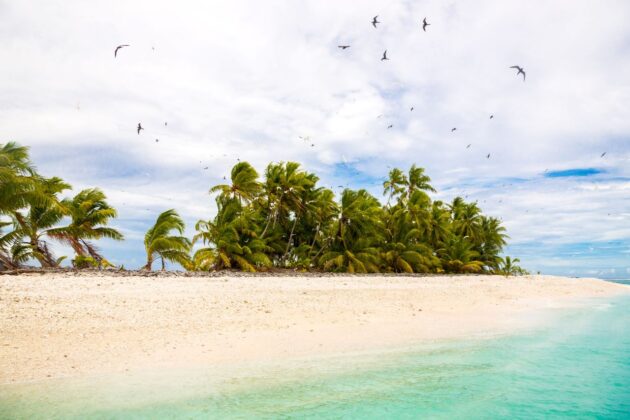
Working with the Government of Tuvalu's Ministry of Home Affairs, Climate Change and Environment to co-create the country's first National Action Plan to End Plastic Pollution.
View partner
National Action Plan to Tackle Plastic Pollution in Tuvalu
Download (54.1 MB)
Regional EPR in SIDS and Remote Geographies
New research led by Common Seas and Circulearth explores how a regional approach to Extended Producer Responsibility (EPR) could help to tackle plastic pollution in SIDS and remote geographies.
Read more